الوقود ومحطات التعبئة
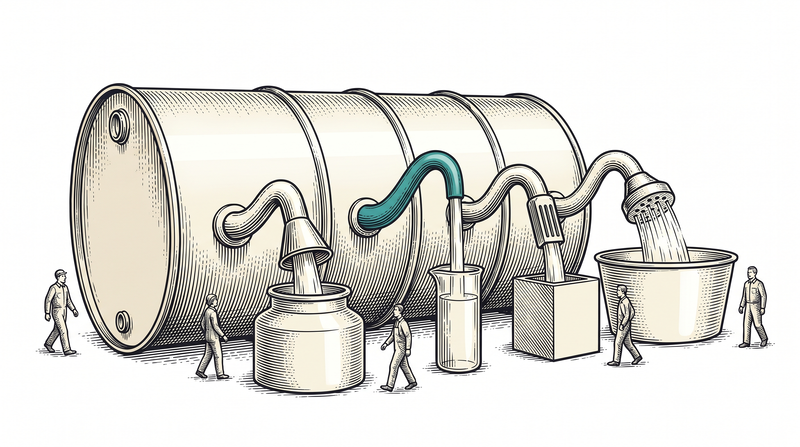
مخزون لا يُعدّ: مطابقة الحجم المتدفق
At a station, stock does not sit on a shelf; it flows through a pipe. How much was sold is read at the pump, how much was lost is measured in the tank, and those two numbers never agree on their own. Thermal expansion, evaporation, measurement tolerance and genuine loss all live inside the same gap. The heart of the job is closing that gap every day, and a system that cannot do it is not holding stock, it is holding a guess.
The second difference is that the shift never ends. A station is open around the clock and responsibility changes hands at handover; if the handover does not close with a count, it becomes unclear whose shortfall it is. The third is separating who takes the fuel from who pays for it: a vehicle arrives, is recognised by its plate and the amount is posted to the company's account. We build these three mechanisms separately.
- Pump-to-tank reconciliation
- Shift handover and till count
- Vehicle recognition and credit accounts
- Price changes propagating at once
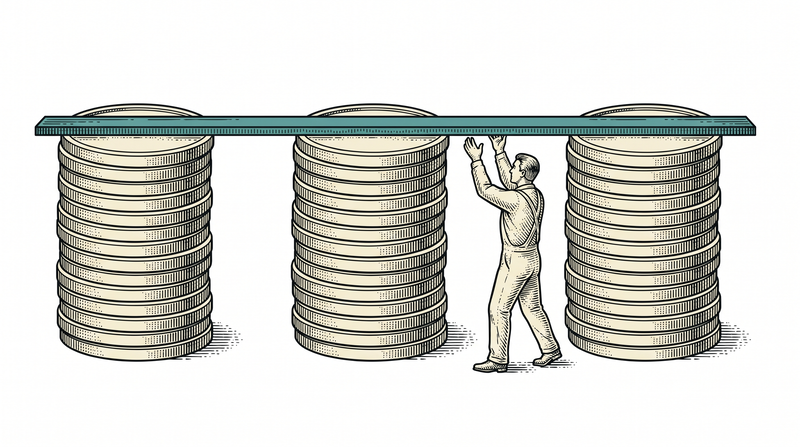
الدورة اليومية للمحطة
From the pump to the shop, the shift to the ledger; every arm of the station meets at the same end-of-day close.
Pump & tank readings
Pump totalisers and tank levels enter the same close, and the difference shows line by line.
Shift handover
The watch is handed over with a count, and any shortfall or surplus stays with that shift.
Vehicle recognition & fleets
A vehicle recognised by plate is posted to its company's limit, and one that hits the limit stops at the forecourt.
Shop & lubricant sales
Non-fuel sales land in the same till; the shop's stock is separate but the close is single.
Price changes & audit trail
Prices change in one place, propagate to the pumps, and who changed them when stays on record.
Deliveries & waybills
The incoming tanker's waybill is checked against the tank level, so a short delivery is caught the same day.
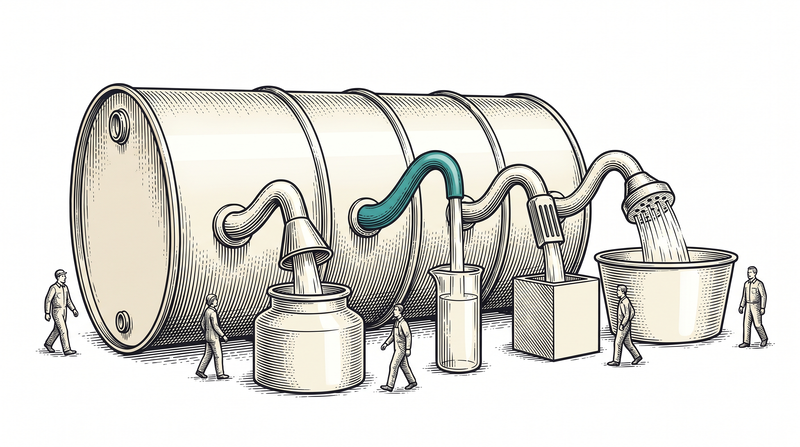
الآليات العاملة تحت السطح
Pump-to-tank reconciliation & loss
The volume sold comes from the pump, the volume lost comes from the tank; they are two separate measurement sources and their difference is never zero. At every close the system computes that gap, sets aside the expected portion — expansion, evaporation, measurement tolerance — and flags what is left. Instead of 'stock did not add up this month' you see which tank, from which day, drifted by how much. A leak or a faulty meter is only ever caught early this way.
- The two measurement sources kept apart
- Expected loss separated from real drift
- Drift tracked per tank and per day
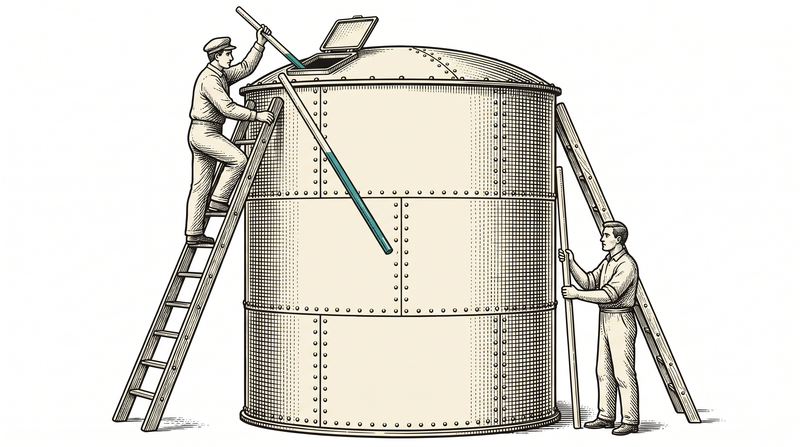
Shift handover & till responsibility
A station does not close, its shift changes. If the pump totalisers, the till and the open accounts are not counted together at handover, a shortfall appearing the next day cannot be attributed to any one watch. The system closes the handover as a single transaction: totalisers are read, the till is counted, the difference is written to that shift's record and the incoming shift starts from the figure it took over. Responsibility is thereby tied to a number rather than to a person.
- Totalisers, till and open accounts close together
- The difference is written to the shift's record
- The incoming shift starts from the figure it took over
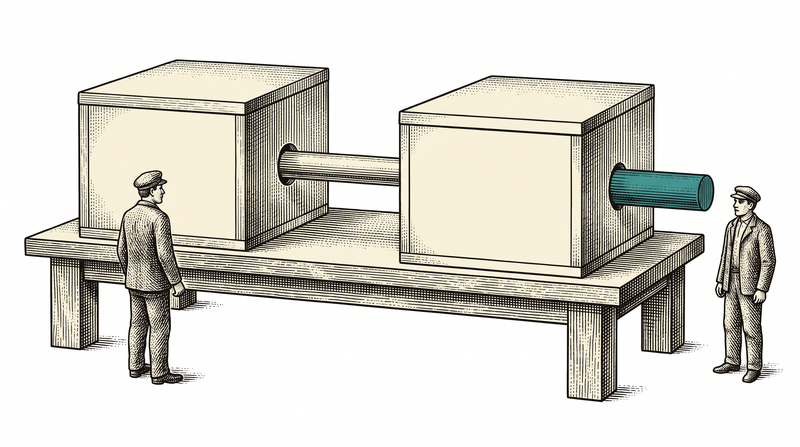
Vehicle recognition & credit accounts
In fleet sales the vehicle takes the fuel but the company pays, and those two belong in the same record yet in separate fields. The vehicle is recognised by its plate, the fill lands on its own record, the amount is posted to the account of the company it belongs to, and that company's limit is enforced on the forecourt. When the limit is reached the transaction stops at the pump, and at month end the invoice can be broken down vehicle by vehicle. Without this separation, fleet receivable stops being a real-time figure and becomes a risk you discover at month end.
- Taking vehicle and paying company as separate fields
- The limit enforced on the forecourt, at transaction time
- Invoices breakable down to the vehicle
ما يأتي قياسياً في كل تركيب
كيف نعمل
Forecourt discovery
We map your pump and automation hardware, tank count and shift pattern on site.
Setting up reconciliation
We calibrate the expected loss allowance against your own history and set the thresholds together.
Training on shift
Training happens at a real handover, and the first close is done together.
Ongoing support
Price changes and deliveries are the busy moments; we stay close with SLA maintenance.
الأسئلة الشائعة
Does it work with our existing pump automation?
The automation side is written as an independent adapter, so if the hardware changes only the adapter changes and the core is untouched.
Who sets the loss threshold?
The threshold is calibrated against your own history and fixed with your approval, and it can be changed later.
Does the fleet limit really stop at the pump?
Yes, the limit check runs on the forecourt at transaction time; it is fail-closed on the server side, so in doubt the transaction does not go through.