التحول الرقمي
Digital transformation isn't a piece of software — it's a change in how work gets done
You can't install one piece of software into a company and call it 'digitally transformed'. If processes live scattered across paper, spreadsheets and email, a single screen won't fix that sprawl — you first have to map where each process gets stuck, then digitize it in the right order. We do that mapping, prioritize it, and run a plan that carries your team along with it.
While building our sector products, we've done the work of moving paper-and-spreadsheet processes into software many times over — from an appointment notebook to a digital calendar, from a hand-kept stock sheet to a single stock pool, from approvals sitting in an inbox to a task-approval flow. Cross-department data integrity and a phased roadmap are the two things that decide this transition, every time.
- Process mapping first, software second
- A phased transformation — not a big bang
- Cross-department data integrity
- Team adaptation and training are part of the plan
6 things digital transformation brings
Digitization, digitalization, digital transformation — not the same thing
A project that starts without this distinction begins with the wrong scope. Whichever stage you're at, the right next step starts there.
Digitization
Converting paper or analog data into digital form: a scanned contract, a customer list entered into a spreadsheet. The process doesn't change, only the data's format does.
Digitalization
Rebuilding a work process using digitized data: moving an approval from email to an approval flow, an appointment notebook to a calendar system. Now the process itself changes.
Digital transformation
Digitalized processes changing the company's way of working and its culture: data becomes a shared decision-making language across departments, not just a record. This is the broadest and slowest stage.
9 benefits of digital transformation
Real data for decisions
Real numbers instead of guesswork; a manager doesn't have to wait for a report.
A traceable process
Who did which step, and when — every action is logged.
Faster approval
An approval waiting in an inbox moves to the next step instantly.
One truth across departments
Sales, warehouse and accounting look at the same number; three separate spreadsheets don't produce three separate truths.
Fewer recurring errors
A forgotten step or a lost document is caught by the flow itself.
Remote / cross-branch access
Data isn't locked to one desk — it's reachable from wherever it's authorized.
Audit trail and compliance
Data-protection and internal-audit requirements are met from day one, not patched on later.
Module-by-module growth as you scale
A new branch or department is added to the system without touching the core.
Team time flowing to the right work
Hours that went to manually moving data flow back to the real work.
The 6 concerns we hear most often
Our team won't adopt the new system — they'll go back to the old way
Phased rollout and on-site training exist exactly for this; the system isn't opened to everyone at once — it's validated with a small group first, then expanded. A period of running parallel with the old method softens the transition.
Our process is too complex — it won't fit into software
That's exactly what the process-mapping phase is for: making complexity visible before simplifying it. A process that looks 'complex' is usually made of exceptions added over the years; once mapped, what's a real rule and what's just habit becomes clear.
The budget and timeline estimate won't hold
After process mapping and prioritization are done, we give you a written scope and timeline; the estimate comes from a clarified plan, not a scope that grows mid-development.
Will we lose data with our existing systems
No. Existing data is mapped, validated and migrated in phases; for a period the old and new systems run in parallel and results are compared.
Isn't this too big a step for a small business
No — transformation can start with a single department or a single process. Instead of a big bang, a small, validated step; scope grows as the organization does.
How will we see the return on this investment
We don't hand you a made-up percentage; instead we define measurable markers on the prioritized processes — approval time, error count, hours spent on manual entry — and track them together as the transformation progresses.
The three things that actually make transformation hard
How many hands are on the lever
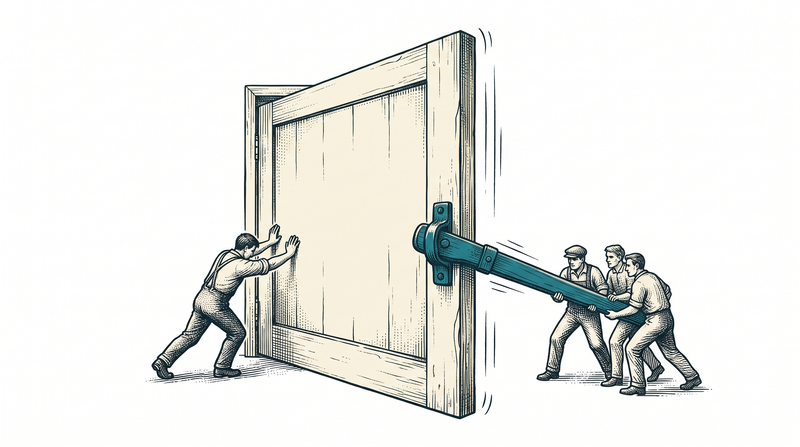
The hardest part of a transformation project is usually not the software — it's the team genuinely adopting the new way of working. A door one person pushes alone doesn't move. That's why training and phased rollout aren't decoration on the plan but part of it: at every step the people who actually run the process are at the table, their objections shape the scope, and the system gets used to the degree that it makes their work easier.
- The people running the process are at the table at every step
- Training and phased rollout are part of the plan
The urge to switch everything on at once
Moving every department onto the new system in the same week means spreading the mistakes everywhere in the same week too. Instead we pick the single highest-impact process, launch only that, and watch it genuinely work with a small group. Once that one process settles, the rest moves far faster — because what's being discussed is no longer an assumption but an example everyone has seen working.
- It starts with the single highest-impact process
- The rollout decision is made on real usage data
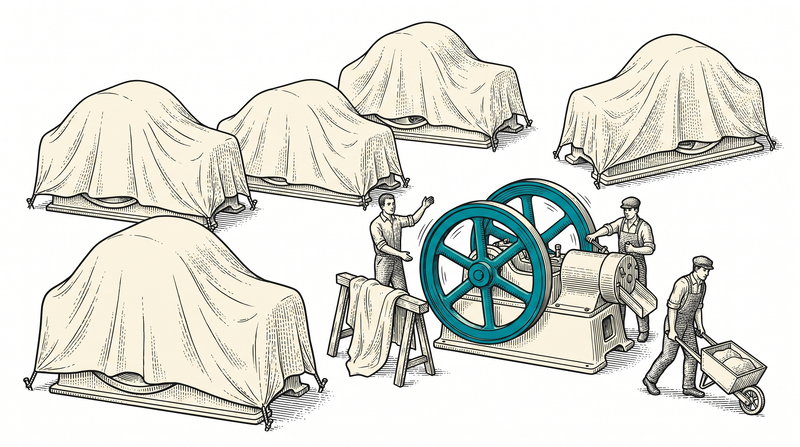
The pressure to rip the old system out overnight
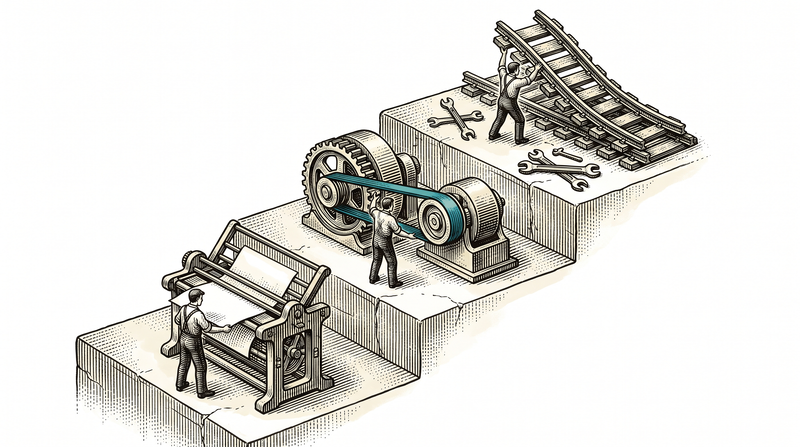
Shutting down a working arrangement and dropping a new one in its place leaves nowhere to fall back to when you notice a problem. We keep the old flow running alongside for a while: data is mapped, both sides run in parallel, and results are compared. The old line stops only once the new one has been seen doing the same job in full — the dullest part of the transition, and the one that saves the most work.
- Data is mapped, validated and migrated in phases
- Old and new run in parallel for a period
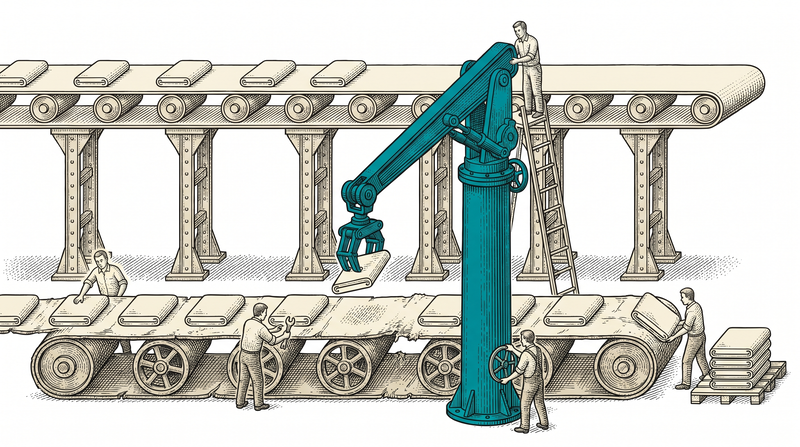
The 5-phase transformation process
Process mapping (1 – 3 weeks)
We map existing processes end to end and document where they get stuck in paper/spreadsheets.
Prioritization & roadmap (1 – 2 weeks)
We decide together which process digitizes first and which later, and produce a written roadmap.
Pilot module development (3 – 6 weeks)
We move the highest-impact process into software first and validate it with a small group.
Cross-department rollout (4 – 10 weeks)
We roll the validated module out to other departments and branches in phases; feedback is collected at every step.
Adoption & optimization (ongoing)
Through training, usage monitoring and small improvements, we make sure the system is actually used.
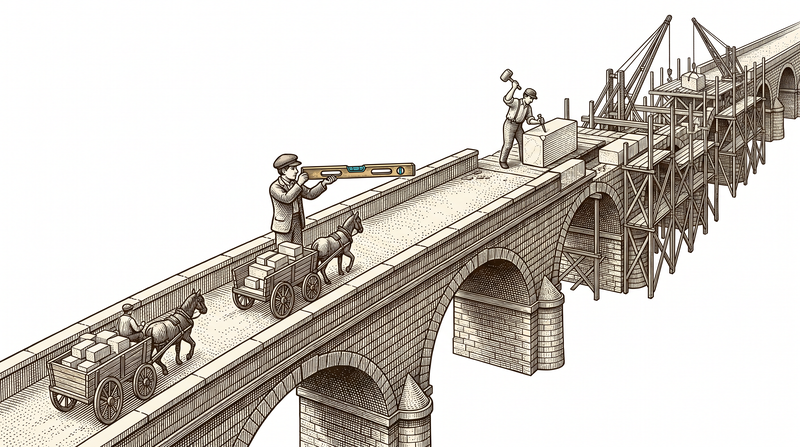
4 transformation areas
Process digitalization
Moving approval, request and work flows from paper to software.
Data integration
Bringing scattered cross-department data into one model.
Decision support & reporting
Turning raw data into a management dashboard and KPIs.
Team adaptation
Genuine adoption of the new system through training and phased rollout.
Frequently asked
Can we start with a single department?
Yes, we actually recommend it. Starting with a single high-impact process lowers risk and lets you decide on expansion using real usage data.
Does it integrate with our existing software?
Yes. It talks to your accounting, ERP or e-invoicing system via an independent adapter; we don't want you to throw away your existing investment.
Our team isn't technical — is that a problem?
No. The interface is designed around the team's real workflow; on-site training and phased rollout have worked repeatedly with non-technical teams.
Does the work end when the transformation is 'done'?
No, transformation is an ongoing process. Post-launch maintenance with an SLA and small improvements driven by usage data are standard.
Who owns the source code and data?
It's yours; we place no restriction on the delivered code, documentation or data.
Let's map your processes together
We'll listen to where things get stuck and map out where to start, together. The first conversation is non-binding.