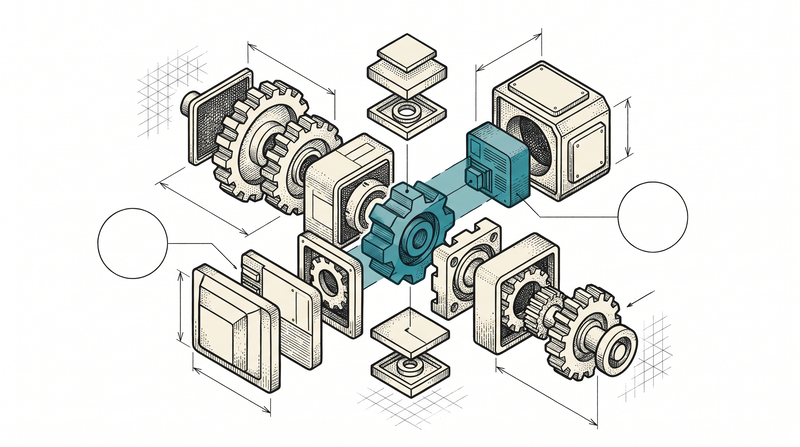
We start where off-the-shelf packages run out
Every business has a way of working, and that way rarely fits neatly into a packaged product's box. Force it into the box and you either bend your process to the software or pay for fifty screens you'll never touch. Vosetu does the opposite: we map your real process first, then build the software around it. Because we've built our sector SaaS products on the same layered architecture (service/bll/dal), even a from-scratch project starts on a field-tested backbone — every engagement builds on distilled experience, not from a blank page.
Custom software comes from two different stories: either turning an idea that never existed into code for the first time, or growing a system that has stood for years but has hit its limits. Each carries a different risk, team shape and pace; we run a separate path for each — we don't tear one down to build the other on top.
- A family of sector products behind us
- Layered architecture (service/bll/dal)
- From-scratch product or phased modernization
- Long-term development roadmap
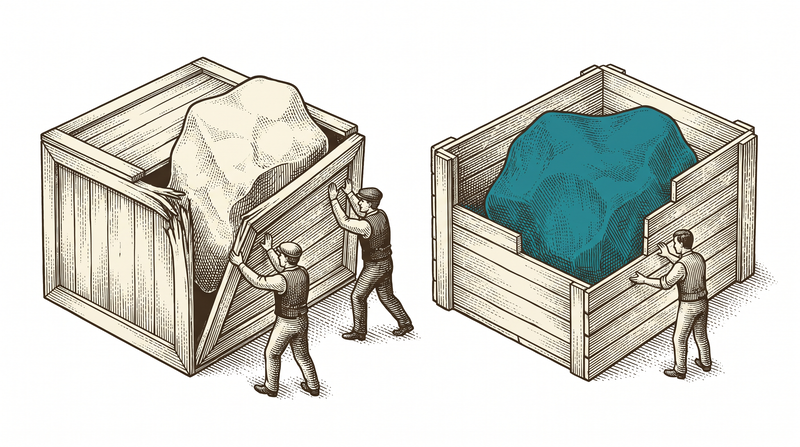
The sub-services living under custom software
Scope varies by project, but all of it draws from the same discipline: understand the need first, then place it in the right layer.
From-scratch custom business application
We move a process that runs by hand or across scattered spreadsheets into software end to end; screens are designed around your flow.
Modernizing an existing system
We move an aging system to a new architecture in phases, without a rewrite; the transition completes without stopping the business.
System integration & API bridges
We build bridges that talk to your ERP, accounting, payment or shipping systems; each integration is added as an independent adapter.
Sector module adaptation
We reshape ready modules distilled from our product family (subscriptions, bookings, stock, reporting) to fit your business.
Reporting & decision-support layer
We build a reporting layer that turns your business data into dashboards, Excel or PDF; decisions rest on numbers, not guesses.
Long-term productization
We grow a tool that started as an internal utility into your own product, with a roadmap that scales as your team does.
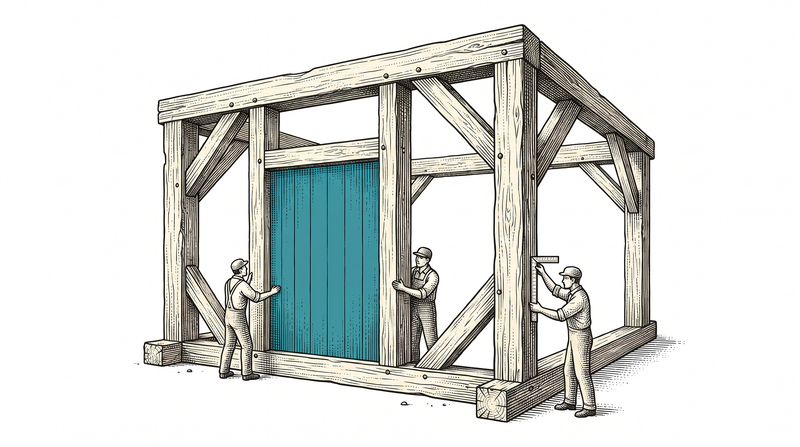
The architectural principles working under the hood
Layered architecture, not scattered code
Every module splits into service/bll/dal layers: business rules live in one place, data access in another, presentation in another. This split has worked the same way across every one of our sector products; a new project built on this order moves faster and stays easy to maintain a year later.
- service/bll/dal split as standard
- Business rules live in one place
- The same pattern proven across our product family
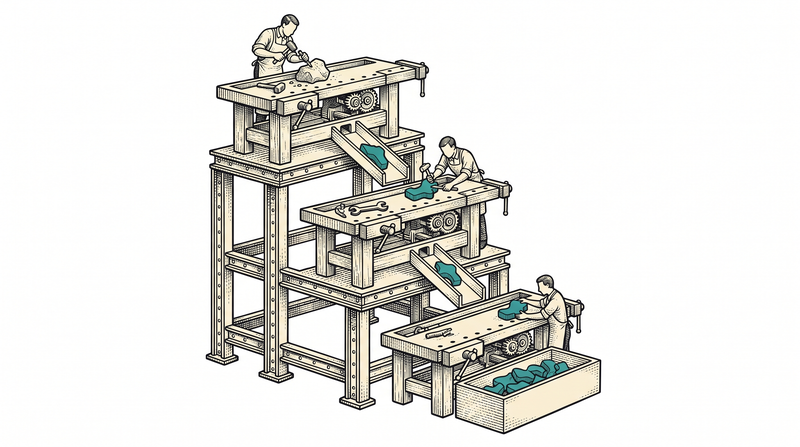
The gate decision lives in one place
The decision of who has a feature turned on doesn't live in 'if' blocks scattered across screens — it lives in one service, with the mapping held in a single constant. If the gate source changes (subscription plan, license, trial period), only that source's adapter changes; the screens stay untouched.
- Gate decision in one service
- Only the adapter changes when the source changes
- No 'if' blocks buried in screens
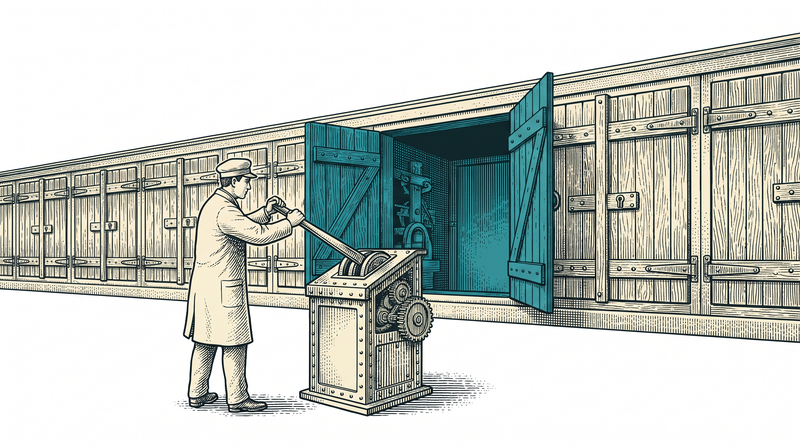
Typed schema, not free-form chaos
jsonb is used only for data that is genuinely free-schema; business data such as subscriptions, invoices and projects always lives in normal, typed columns. This split keeps both querying and reporting simple — the answer to 'where is this field' is never a search inside JSON.
- Business data in typed columns
- jsonb only for genuinely free-schema data
- Simple queries, simple reports
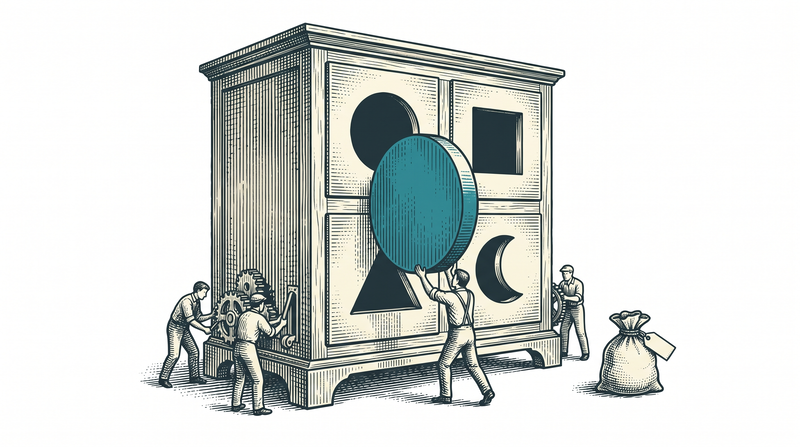
Flow A — Building a brand-new product from scratch
Extracting the idea & process
We put the idea on the table, clarify who will use which screen for what, and put the scope in writing.
Setting up the architecture
The layered architecture (service/bll/dal), data model and identity/permission foundation are set up first; every later module rests on it.
Development & testing
Modules are delivered in sequence, each one secured with automated tests; you see the real screen at every stage.
Launch & growth
The first version goes live, and the roadmap is updated with feedback from real usage.
Flow B — Growing an existing system
X-raying the current system
We review the code, data model and bottlenecks; what stays and what changes is clear from the start.
Adding modules in phases
A new module is added alongside the old one without breaking it; the team and users adapt to the new structure step by step, not all at once.
Data migration & parallel run
Data migrates in phases while the old and new systems run in parallel for a period; results are validated by comparison.
Zero-downtime cutover
Once validation completes, the old system is retired on schedule; the business process sees no visible interruption.
Sectors where we run this approach live
Custom software isn't an abstract promise; each of the sectors below has working products built with the same discipline.
Food service
Our food-service product, uniting order tickets, kitchen display and delivery in one engine, is this architecture at work in the field.
Logistics
Five separate logistics verticals — courier, moving, fleet and fulfillment — share the same routing-delivery-fleet core.
Manufacturing
The work-order and cost engine in our printing-industry product runs live on the shop floor with the same layered approach.
Finance & insurance
We've built the subscription and billing engine, and pension/life-insurance portfolio tracking, many times over in real SaaS products.
Enterprise & IT
Our enterprise product family — work and issue tracking, approval flows and document management in one platform — grew from the same core.
Retail & e-commerce
Our retail products, uniting stock, orders and marketplace integrations in one panel, draw from the same module library.
What ships as standard in every custom software project
The technology we build on
- .NET 9
- ASP.NET Web API
- PostgreSQL
- Angular
- Next.js
- TypeScript
- Layered (service/bll/dal)
- Adapter-based integration
- Redis
- Docker
- MinIO
Frequently asked
Do you write from scratch, or use ready-made components?
Both. The code is always written specifically for you, but modules distilled from our sector products (subscriptions, bookings, stock, reporting and the like) are reshaped to your business instead of being written from zero. That brings both speed and a proven track record.
How long does the process take?
It depends on scope; a small module ships in a few weeks, an end-to-end system in a few months. At the end of the requirement analysis we give you a written timeline and scope — we don't leave the estimate as a feeling.
Can you build on top of our existing system?
Yes. We review your existing code and data model first; our phased modernization flow (Flow B) exists exactly for this — moving to the new structure step by step, without stopping the system.
Who owns the source code?
It's yours. The delivered source code, documentation and infrastructure definitions belong to you; we place no restriction if you later want to hand maintenance to another team.
Do you provide support after launch?
Yes. Post-launch maintenance with an SLA is standard: bug fixing, security updates, new integration and enhancement requests are handled under contract.
Let's put your idea or your system on the table
Whether we build from scratch or grow what you already have, we'll listen to your process and map out where to start, together. The first conversation is non-binding.