SaaS & Mandantenfähige Architektur
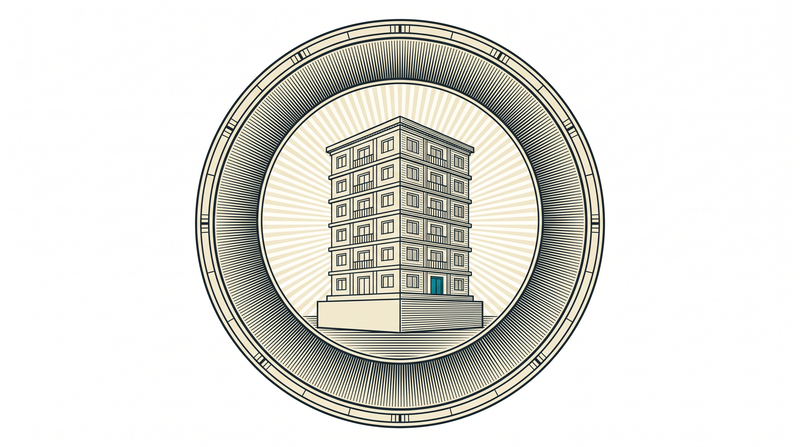
One core, unlimited tenants
Building SaaS isn't making an existing app 'multi-user'; it's a different architectural decision from day one. Tenant isolation, subscription and plan management, usage limits and gating decisions aren't features patched on later — they're foundations that belong in the core from the start. We haven't built this once; we've built it sector after sector.
From health to hospitality, sports to field services, we've built SaaS products across very different verticals on the same multi-tenant core. Some of them are in daily use by real businesses running real revenue through them. Your SaaS is built on that field-tested core too — not invented from scratch.
- Different sectors, one shared core
- Running live in real businesses
- Tenant isolation in the architecture from day one
- Subscription + gating engine as standard
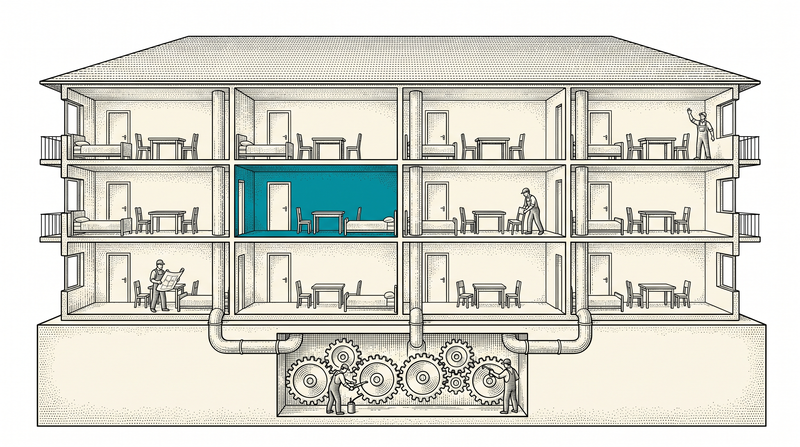
5 capabilities a SaaS needs from day one
5 services living under the SaaS core
Each can be set up independently, yet all share the same tenant, user and permission model.
Multi-tenant architecture setup
Schema/row-level tenant isolation, per-tenant settings and branding; one tenant's data never leaks into another's.
Subscription & gating engine
Plan, trial period and usage limits come together in one engine; the decision of who has a feature turned on lives in a single service.
Role/permission & organization management
Multi-user, role-based authorization within a tenant; each customer sets up their own organization.
Fast adaptation to a sector vertical
The shared SaaS core turns quickly into a new vertical with sector-specific modules — bookings, stock, subscriptions.
Scaling & multi-region deployment
With containerization, caching and monitoring, only the infrastructure grows as tenant count rises — not the pain.
How AI fits into a SaaS product
The data is already in one core
Every tenant's bookings, orders and reporting data already sit in one, typed data model — a natural starting point for adding AI-assisted search, recommendations or summarization. We don't claim a pre-built 'AI module'; what we build is the clean data foundation those features stand on.
- A typed, single-source data model
- Tenant-level data isolation is preserved
- AI is added as an adapter, not into the core
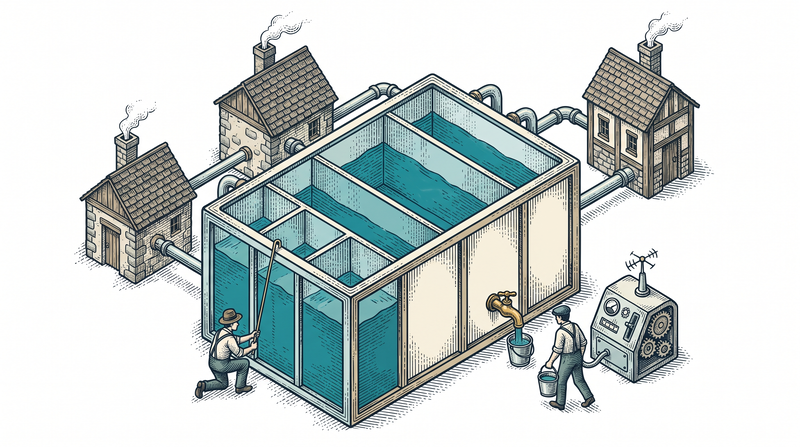
The gating engine manages AI features too
The decision of which plan can use an AI feature (e.g. smart recommendations, auto-summarization) lives in the same single gating service as every other feature. That means adding AI to a higher plan is changing a line in a constant, not embedding a new 'if' block into a screen.
- Plan-based AI feature toggling
- No 'if' blocks buried in screens
- Only the adapter changes when the source changes
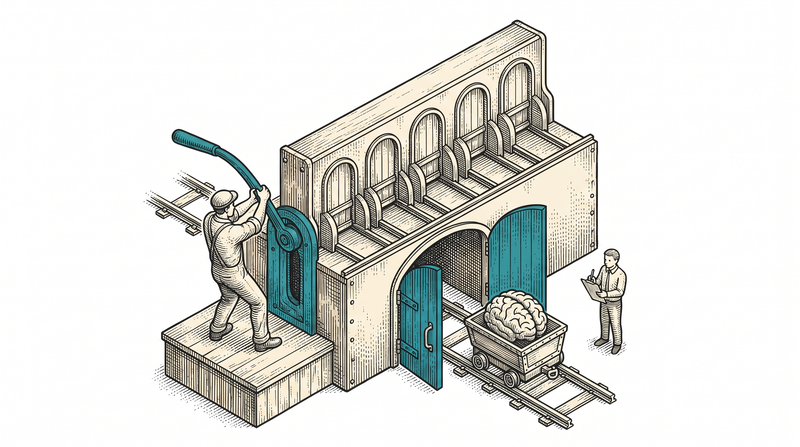
It opens in a narrow scope first, then spreads
A new AI feature isn't opened to every tenant on day one. Thanks to the gating engine, it's first enabled for a single plan or a single tenant, and how much it actually helps — and how much load it adds — is measured in real use; only then does the scope widen. Widening without measuring is the most expensive decision to undo later.
- A scope that starts with one plan or one tenant
- Measurement in real use, then rollout
- The rollout decision is one line in a constant
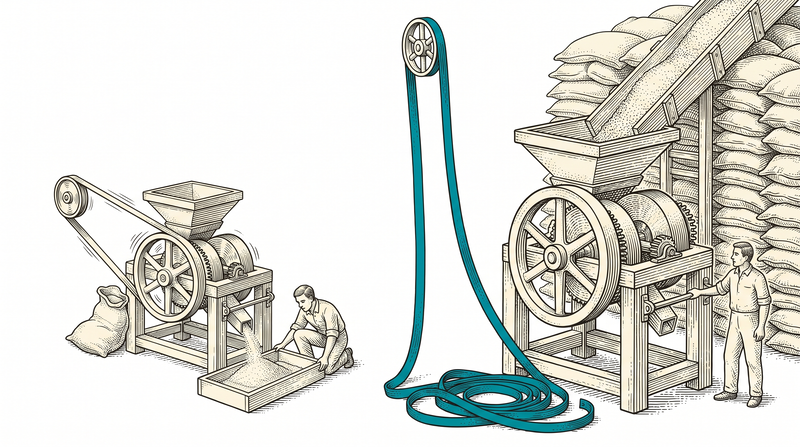
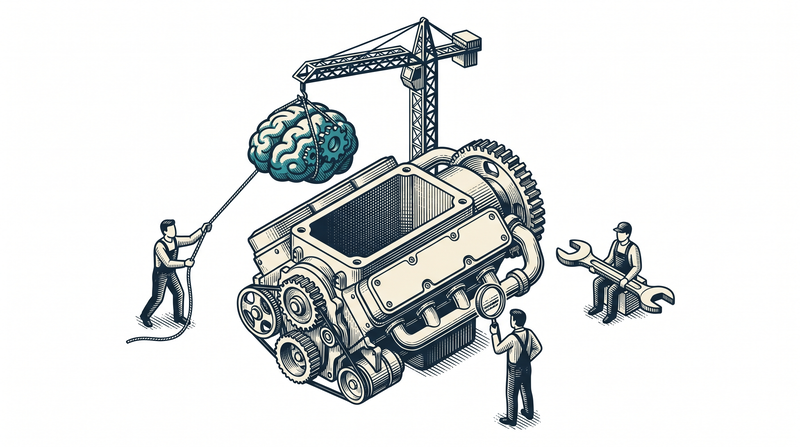
The 3 layers of building SaaS at scale
Multi-tenant architecture
Tenant isolation, a typed data model and the identity/permission foundation are set up first; every new tenant rests on this base without touching the core.
Integrations
Payment providers, e-invoicing, SMS and email are added as independent adapters; when a provider changes, only that adapter is updated.
DevOps
With containerization, CI/CD and monitoring, deployment scales automatically as tenant count grows; downtime risk doesn't depend on manual steps.
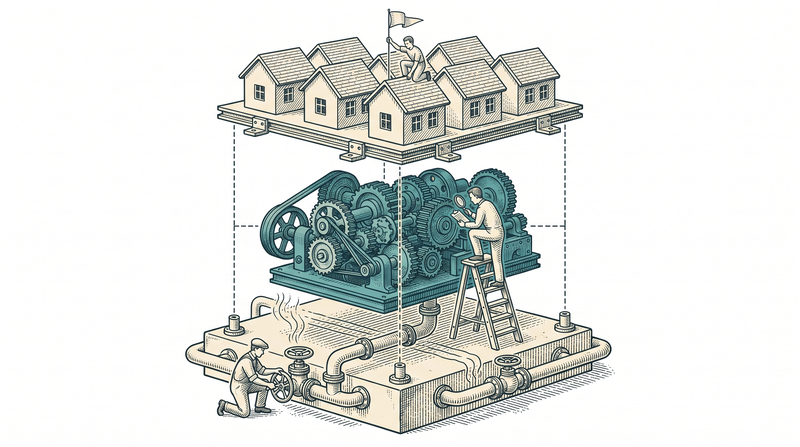
The sector clusters our SaaS products span
Each cluster has its own way of working, yet all share the same tenant, subscription and permission core.
Health & care
Clinics, dental, physiotherapy, pharmacy, lab — appointments and patient records from the same core.
Hospitality & travel
Hotels, guesthouses, dorms, food service, tour operators, flight schools — we have live businesses in this cluster.
Sports & lifestyle
Gyms, turf fields, clubs, daycares, study centers — sharing the same membership/booking core.
Services & field
Laundries, repair shops, auto services, moving, cargo, tailors — shared work orders and field tracking.
Commerce & office
Real estate agencies, jewelers, law, accounting, property management, farms, fulfilment.
Publishing & corporate
A multi-tenant content platform managing unlimited sites on one infrastructure.
Food service
Menu, tabs, kitchen display and till in one panel — running in real restaurants.
Beauty & appointments
Appointments, staff and register management for hair and beauty salons — in live use.
The technology we build on
- .NET 9
- ASP.NET Web API
- PostgreSQL
- Schema/row-level isolation
- Plan + limit + gating engine
- Next.js
- Angular
- TypeScript
- Redis
- Docker
- MinIO
Who works on your SaaS project
Frequently asked
Have you actually put this into production before, or is it all demos?
The same core runs live with real businesses across content management, food service and beauty verticals. The other sector solutions are defined on that core and go live as the need comes up.
How is tenant isolation ensured?
The data model is separated by tenant from the start; schema- or row-level isolation is chosen based on the project's scale. A user from one tenant can never access another tenant's data under any condition — this isn't a control added later, it's the architecture itself.
Do you build the subscription and payment infrastructure?
Yes. We build a subscription engine covering plans, trial periods, usage limits and payment-provider integration; we've built this engine many times across our SaaS products.
Do we need to bring a from-scratch SaaS idea?
No. Turning an existing business into a SaaS or building a completely new idea from scratch are both possible; in either case the starting point is the same field-tested multi-tenant core.
Does performance drop as tenant count grows?
The architecture is built to prevent this: caching (Redis), containerization and monitoring mean that as tenant count grows, only the infrastructure needs to grow — the application logic doesn't change.
Can we adapt it to a new sector after launch?
Yes. The shared SaaS core adapts to a new vertical with sector-specific modules (bookings, stock, subscriptions and the like); every one of our products came about exactly this way.
Let's build your SaaS idea on a field-tested core
We'll listen to your tenant model and plans and map out where to start, together. The first conversation is non-binding.