Echtzeitsysteme
Some jobs can't wait a second
Where a courier is, an order landing in a kitchen, a sensor reading from a device — here, delay is a defect.
Live location & tracking
The location of a courier, a vehicle or a field team updates on the map within seconds.
Instant notification & push
The moment an event happens, the right notification reaches the right person — not minutes later, that instant.
Real-time screen updates
A register screen, a kitchen display or a management dashboard reflects what's happening behind it without a page reload.
Device & sensor data streaming
A reading from a meter or sensor lands in the system before a human looks, and a threshold breach is caught instantly.
Event-driven architecture & queues
When an event happens, more than one system may need to react; a message queue puts that reaction in a reliable order.
Live streaming & synchronization
Playback state on one device stays in sync with a remote control on another, without lag.
Choosing the right channel comes before moving the right data
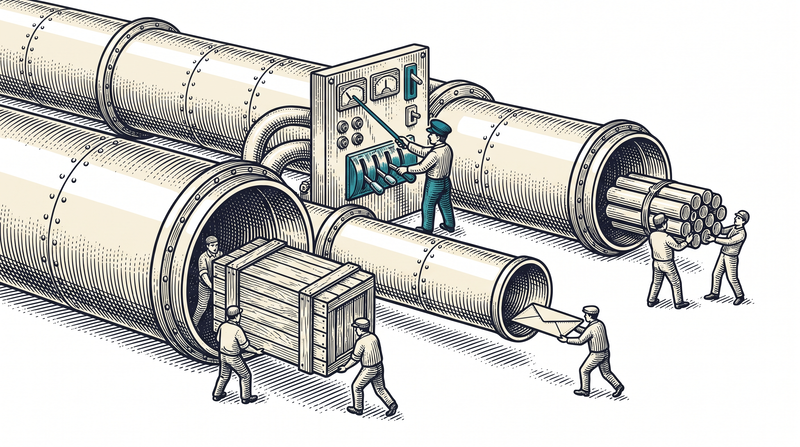
Real-time isn't one technology; it's a channel choice that changes with the shape of the work. We use WebSocket/SignalR to update a user interface instantly, push notifications (FCM) to guarantee reaching a mobile device even when it's asleep, and a message queue (RabbitMQ, Redis) when more than one system needs to react to an event. The wrong channel choice either adds needless load or delivers data late — neither is acceptable in a real-time system.
We haven't tried these channels in isolation; we've built them working together inside our sector products. On the logistics side, live location streams over WebSocket, the same system pushes an alert for a delayed delivery, and a lagging event behind the scenes drops into a queue and retries. The hard part wasn't writing the three separately — it was making sure that when one stumbles, the other two don't show the wrong thing.
- WebSocket/SignalR: instant UI updates
- Push (FCM): reaches even a sleeping device
- Message queue: reliable, ordered event response
- All three channels working together in one product
Real-time at work in real scenarios
Logistics: live tracking of couriers and fleet
A courier's, driver's or field team's work happens on the road, not at a desk. The day's shipments are sequenced into a route, and every step — departed, delivered, collected — is recorded instantly from the phone; the control screen watches the whole field live over SignalR. This is the shared backbone of our five logistics-vertical products.
- Live location updates over SignalR
- Every step recorded instantly from the phone
- The whole field watched live from control
Lag-free sync across devices
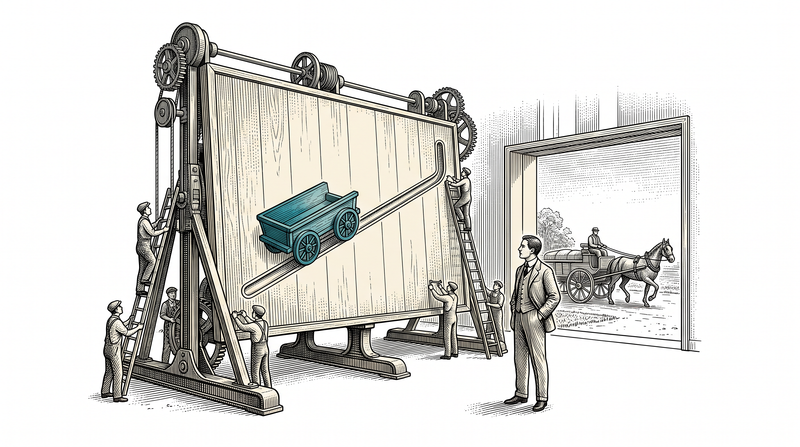
We built a mobile app that casts video from phone and web to the television, with queue and remote-control support. A 'next video' command given on one device runs instantly on the other; playback state and queue order stay in sync across devices. Here lag isn't a flaw, it's a broken experience outright — the user just presses the button twice.
- Remote-control commands deliver without lag
- Playback state stays in sync across devices
- Queue order updates live
Facility management: notification the moment a threshold is crossed
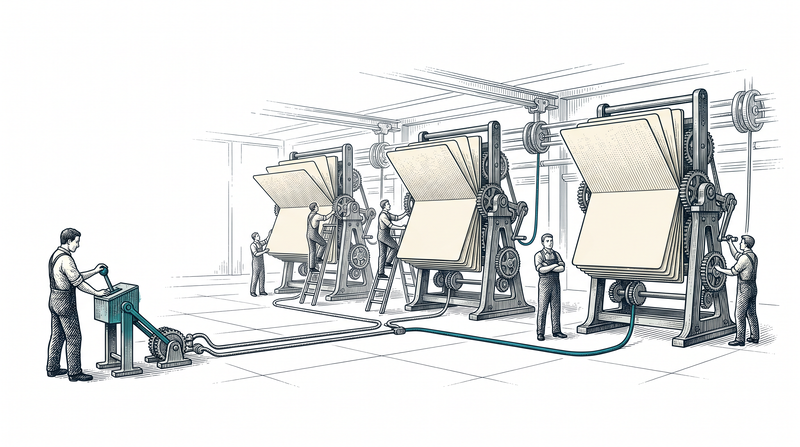
Meter and sensor data is collected continuously via an edge gateway; when a value crosses a threshold, an outage occurs, or an anomaly appears, a notification fires simultaneously by SMS, email and on the dashboard. The manager sees the problem on the dashboard that instant, not in a report the next day.
- Instant notification over three channels on threshold breach
- Continuous streaming of sensor data
- A problem shows on the dashboard without waiting for a report
How we build a real-time system
Channel selection
We decide together which of WebSocket/SignalR, push (FCM) or a message queue is the right tool, based on the shape of the work.
Event model & queue design
We define which event triggers whom, and build a reliable, ordered event flow on RabbitMQ/Redis.
Scaling & reconnection
We design upfront what happens when a connection drops (reconnection, catching up on missed events) and test it under load.
Monitoring & go-live
We monitor latency and connection metrics, validate under real load in production, then continue under SLA maintenance.

Other sectors where real-time is at work
Beyond the three examples above, the same discipline takes a different shape in other products of ours.
Restaurants & cafés: kitchen display (KDS)
An order taken at the register drops onto the kitchen display instantly, without paper; prep order is managed from there.
Private security: incident logging
An incident logged in the field appears on the manager's dashboard at once, with its photo and location.
Public sector & facility: work-order alerts
A citizen request drops to the field as a work order at once; the office is notified the instant it's completed.
Care: shift changes
A change made to a roster appears at once to the affected caregiver or security officer — no phone traffic needed.
What ships as standard in every real-time setup
The technology we build on
- WebSocket
- SignalR
- FCM
- RabbitMQ
- Redis
- Time-series
- PostgreSQL
Let's make your can't-wait work instant
We'll listen to what data you need to move and how fast, and choose the right channel together. The first conversation is non-binding.
Häufig gestellte Fragen
Nur fertige Produkte oder auch Individualentwicklung?
Beides. Unsere Produkte laufen im Abo; bei anderem Bedarf entwickelt dasselbe Team individuell.
Wie funktioniert die Preisgestaltung?
Monatsabo für Produkte; Festpreis oder Monatsvertrag für Projekte. Erstgespräch kostenlos.
Unterschreiben Sie NDAs?
Ja — auf Wunsch vor dem ersten Gespräch.
Können wir aus dem Ausland zusammenarbeiten?
Ja, wir arbeiten remote-first; Kommunikation auf Türkisch und Englisch.
Integriert es sich in unsere Systeme?
Integration ist unser Kern: Unsere Lösungen sprechen mit bestehendem ERP/CRM und Hardware.