Software-Integration & API
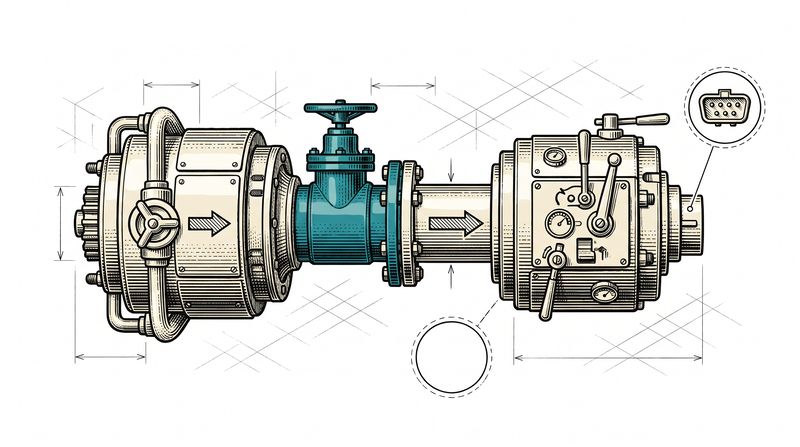
If your systems don't talk to each other, work runs by hand
If your ERP doesn't talk to your accounting software, your e-commerce site to your courier, your booking system to your payment provider, a person fills the gap — copy-paste, manual data entry, a forgotten step. We bridge that gap: data flows through your systems from one point, the same information doesn't live differently in two places.
This is our most concrete area of proof. Official system integration isn't a promise for us — it's a reality running every day inside our sector products: Medula and İTS in our healthcare products, UYAP in our legal product, KBS in our hospitality product, ÇKS in our agriculture product, Amazon SP-API in our logistics and retail products all run as live integrations. Adding a new system means writing an independent adapter without touching the core; when a service changes, only that adapter is updated.
- Official system integration in live products
- Modular adapter architecture
- Webhook & event-driven flows
- Modernizing a legacy system while keeping it running

The 3 assurances you should expect from an integration
Reliability
With queue and retry logic, data isn't lost on a network outage; a failed call isn't silently swallowed.
Security
Endpoints are protected with OAuth2, HMAC signing and mTLS; credentials and secret keys never leak into logs.
Future-readiness
Adding a new system means writing an adapter without touching the core; complexity doesn't compound as the number of integrations grows.
If any of these sound familiar, it's worth a conversation
6 integration types, matched to your need
Every integration has a right shape; picking the wrong type means needless complexity or a fragile connection.
RESTful API
Exposes your system through a secure, documented endpoint; other systems read and write through it.
Middleware & queue
A buffer layer such as RabbitMQ/Redis sits between two systems; under load, data isn't lost — it queues.
Point-to-point
Connects two systems directly; a fast, lean solution for a small number of low-volume integrations.
Data integration (ETL)
Bulk data movement and sync; regular transfer from an old system to a new one, or between two databases.
Cloud/service integration
Connections to SaaS APIs like payment, shipping, e-invoice and marketplaces; the interface stays fixed even if the provider changes.
Event-driven
When something happens (an order is placed, a payment is received) a webhook fires instantly; no need for constant polling.
The proof we put on display: our integrations that run live with official systems
Healthcare's official backbone
In our polyclinic and pharmacy products, integration with Medula for authorization and invoicing, İTS for drug-barcode tracking and e-Nabız for the national health record runs live every day. This isn't a target — it's code running in production.
- Medula authorization & invoicing
- İTS drug-barcode tracking
- e-Nabız national health record

Legal and accounting's official services
Our law-office product pulls case/file and hearing data via UYAP; the accounting side pulls filing and taxpayer services. The deadline and limitation engine calculates automatically from that incoming data.
- UYAP case/file & hearing data
- Filing & taxpayer services
- e-signature-backed approval
Hospitality and agriculture's official records
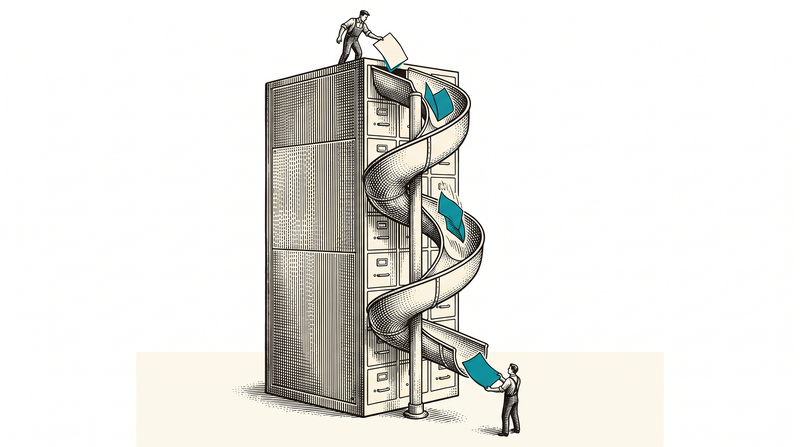
Our hospitality product records a checked-in guest's ID ready for the mandatory KBS report; reservations from the channel manager (OTA) gather into one queue. Our agriculture product produces registry- and subsidy-filing-ready, exportable records for ÇKS.
- KBS guest-ID reporting
- OTA channel manager
- ÇKS-ready record export

Marketplace and fulfillment
Our logistics and retail products pull orders via Amazon SP-API, sync stock and price, and produce a shelf-location-based pick list in the warehouse. Adding a new marketplace means writing an adapter without touching the core.
- Amazon SP-API order pulling
- Stock/price sync
- Shelf-location-based pick lists
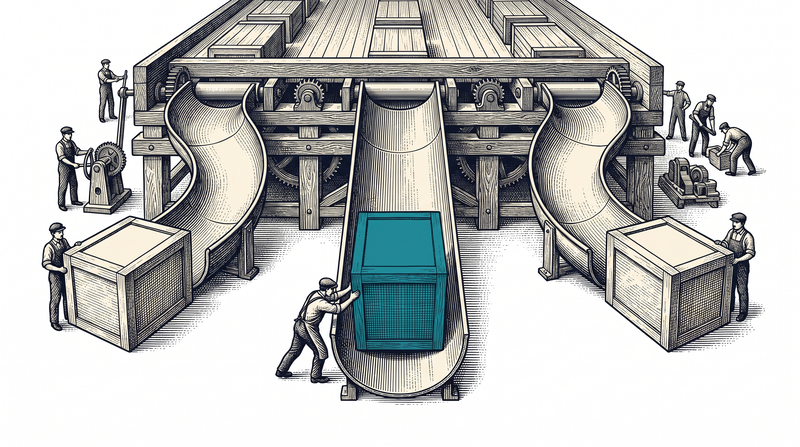
How we set up an integration
We map the systems & data contract
We extract the API documentation, data format, and rate/limit constraints, and clarify what each side expects.
We design the adapter
We build the integration as an independent module rather than embedding it in the core; when the service changes, only this module is updated.
We test in a sandbox
With the provider's sandbox/test credentials we validate end-to-end scenarios together — success, failure, timeout.
We build error and retry logic
Queueing, retry and a dead-letter queue are set up; if a call fails, data isn't lost — it's flagged.
We go live & monitor
The integration is wired into monitoring; error rate and latency are tracked, then it continues under SLA maintenance.

The technology we build on
- .NET 9
- REST
- Webhook
- RabbitMQ
- Redis
- Official systems
- payment
- e-invoice
- shipping
- OAuth2
- HMAC
- mTLS
From the products our integration experience comes from
Every official or marketplace integration we've built across different verticals shares the same modular adapter architecture.
Medora
Polyclinic management: Medula authorization and invoicing integration runs live.
Ecora
Pharmacy management: drug and product tracking via İTS drug-barcode integration.
Law & accounting practice solution
Connects to the profession's official backbone via UYAP case/file integration and filing services.
Fulfillment solution
Order pulling, stock/price sync and shipping flow via Amazon SP-API integration.
Which of your systems need to talk to each other?
We'll listen to your existing systems and the services that need to connect, and map out where to start, together. The first conversation is non-binding.
Häufig gestellte Fragen
Nur fertige Produkte oder auch Individualentwicklung?
Beides. Unsere Produkte laufen im Abo; bei anderem Bedarf entwickelt dasselbe Team individuell.
Wie funktioniert die Preisgestaltung?
Monatsabo für Produkte; Festpreis oder Monatsvertrag für Projekte. Erstgespräch kostenlos.
Unterschreiben Sie NDAs?
Ja — auf Wunsch vor dem ersten Gespräch.
Können wir aus dem Ausland zusammenarbeiten?
Ja, wir arbeiten remote-first; Kommunikation auf Türkisch und Englisch.
Integriert es sich in unsere Systeme?
Integration ist unser Kern: Unsere Lösungen sprechen mit bestehendem ERP/CRM und Hardware.