AI-Powered Applications

AI is no longer an add-on — it's a natural part of the product
An AI feature doesn't stand in the air; it needs an orderly, typed, single-source data model underneath it. That's exactly what we built while putting our products on a single core: customer, booking, order and reporting data lives in one structure, not scattered tables. When a feature like smart search, recommendations or summarization gets added, the ground it stands on is already there.
We didn't learn this by watching from outside. We built an app that runs a large language model directly inside the phone, fully offline; from document chat (RAG) to offline voice, that's where we saw how these capabilities sit in production code, where they slow down, and what a device can and can't carry. We bring the same discipline to client projects: AI isn't buried in the core, it's added as an independent adapter.
- Experience actually running on-device AI in the field
- LLM/RAG integration added as an independent adapter
- A single-core, AI-ready data model
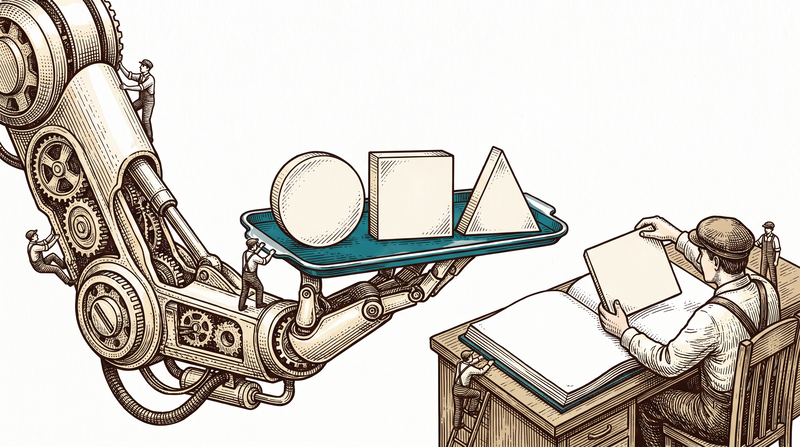
- The machine brings the options; the person decides
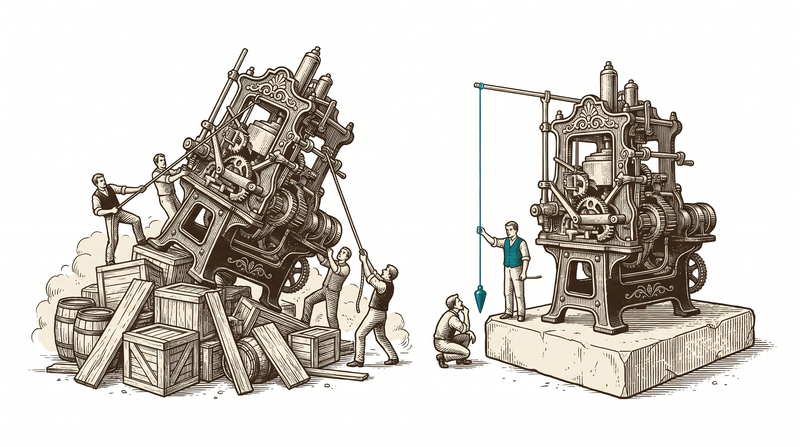
The benefits of adding AI in the right place
Faster search & discovery
Meaning-based search instead of keyword matching; the user finds what they're looking for on the first click, not the third.
Personalized recommendations
Recommendations shaped by the user's past behavior; a ranking specific to that person, not a generic list.
Automatic summarization & reporting
Distills a long document or a pile of reports into a readable summary; the wait before a decision shortens.
Document/image understanding
Turns data from an invoice, form or photo into a structured record without manual entry; the error margin drops.
Chat assistant & automated response
Handles frequent questions and simple requests without waiting for a human; hands off to a person correctly when things get complex.
Decision support, not decision-making
AI output offers a suggestion; a human makes the final call — critical business decisions stay traceable and justified.
Our AI services
Scope narrows or widens by project; all of it draws from the same discipline — the data model first, the feature second.
Large language model (LLM) integration
We connect a provider's API to your app as an independent adapter, not embedded in the core.
Smart search & recommendation systems
We build embedding-based similarity search and a recommendation engine.
Document/image understanding & content generation
We turn unstructured data (documents, images) into structured records and generated content.
Chat assistant & automated responses
We build an assistant that talks with your product's data — not a generic chatbot, but a layer tied to your data.
Customization with your own data (RAG)
The model answers using your documents and database, not generic internet knowledge.
On-device / edge AI and privacy
AI that runs offline without data leaving the device; an approach we've tested in our own app, for sectors working with sensitive data.
Proof of the expertise: our own AI product
We don't just describe on-device AI — we run it in a product.
Our on-device AI application
It runs a large language model directly on the phone and can work fully offline: document chat (RAG), offline voice and an optional hybrid cloud. Because data never leaves the device, privacy isn't a setting you toggle — it's the architecture itself.
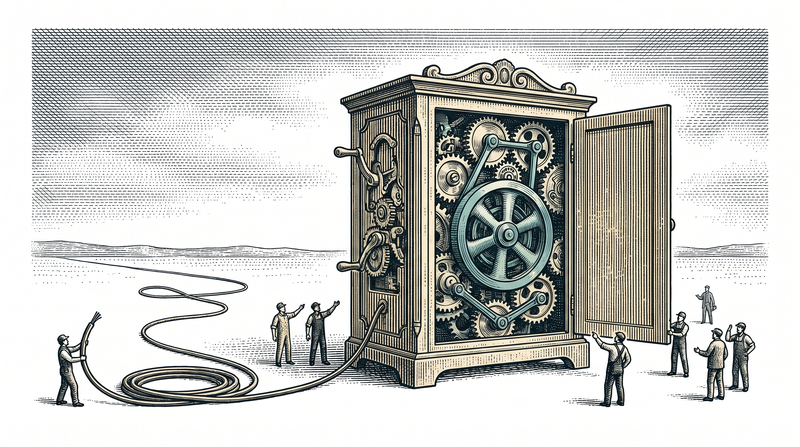
The question we ask before adding AI: is the data ready?
The data model first, the feature second
Adding AI on top of scattered spreadsheets and free-text fields is building a floor on a cracked foundation. So we ask first whether the data is ready: is business data in typed columns, are there duplicate records, are fields consistent. The typed-schema discipline we've built across our products usually makes the answer 'yes'.
- Business data in typed columns, jsonb only for genuinely free-schema data
- A single-source data model, no duplicate records
- A short data-readiness pass before AI

Low-risk integration via an adapter architecture
We don't embed an AI provider into the core; it's added as an independent adapter. If the provider changes, pricing changes, or a model's capability falls short, only that adapter is updated — the rest of the application is unaffected. In our own on-device app we took this to its far end: behind the same interface, the local model on the device and a cloud provider can swap places.
- A provider-independent adapter architecture
- A model/provider change doesn't touch the core
- Critical decisions always remain subject to human approval
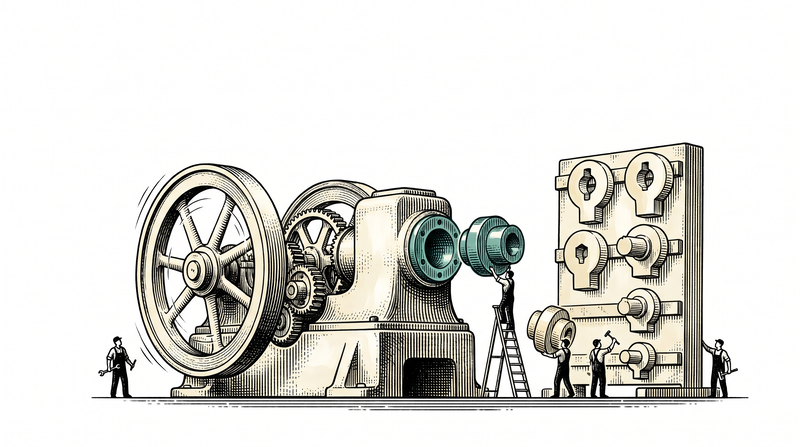
The boundary is set in the data layer, not in the prompt
AI cannot see more than the person asking is already entitled to see. We don't set that boundary by asking the model nicely not to mention something — we set it by carrying the user's permissions into the query that fetches the data, so the model only ever sees the records handed to it. The permission rule lives in one place, and the AI feature is a consumer of that rule, not an exception to it.
- Permissions are carried into the fetching query
- The model only sees the records handed to it
- One rule, one place — AI is not an exception
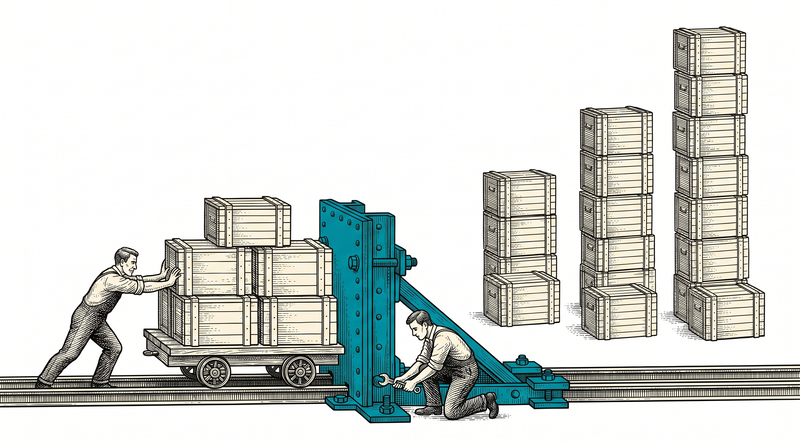
Realistic AI use cases by sector
How can AI be used in healthcare products?
Turning free-text notes in a patient file into a structured summary, flagging an unusual value in test results; the final medical decision always stays with the physician. Where data must not leave the device, an on-device/on-prem setup steps in.
Where does AI help in retail and marketplaces?
Auto-generating product descriptions from catalog data, ranking search results by meaning, suggesting reorders based on demand forecasting.
What can AI do in logistics?
Beyond route optimization, forecasting delivery time from historical data and flagging an unusual delay pattern early.
What kind of contribution does AI make on the restaurant and café side?
Summarizing menu performance from sales data, generating a reorder alert before stock runs out; it speeds up reading the data behind the till, not the human decision at it.
Is AI safe in privacy-sensitive professions?
In fields where data must not leave — law, accounting, clinics — on-device/on-prem AI is the right answer: document chat and summarization run entirely locally, and data does not go to a server. We built our on-device app on exactly this foundation.
Are these use cases running live today?
They aren't turned on as standard in individual products today — these are realistic examples our data model and on-device experience can support today. We determine together which one is the priority for you.
How we build an AI feature
Assessment
We assess together whether your data model is AI-ready and which feature carries real value.
Discovery
We clarify the right model/provider, whether it runs on the device or in the cloud, privacy constraints and the integration point.
Development
We build the AI adapter without touching the core and wire it end to end with your real data.
Testing
We validate output accuracy, edge cases and the cost/performance balance under real usage.
The technology we build on
- Provider API
- On-device inference
- RAG
- Embeddings
- Semantic search
- .NET
- PostgreSQL
- Next.js
- Flutter
Let's find together which feature carries real value
We'll listen to your data model and priorities and map out where to start, together. The first conversation is non-binding.